Hidden Camera Detection Service Malaysia: What It Involves
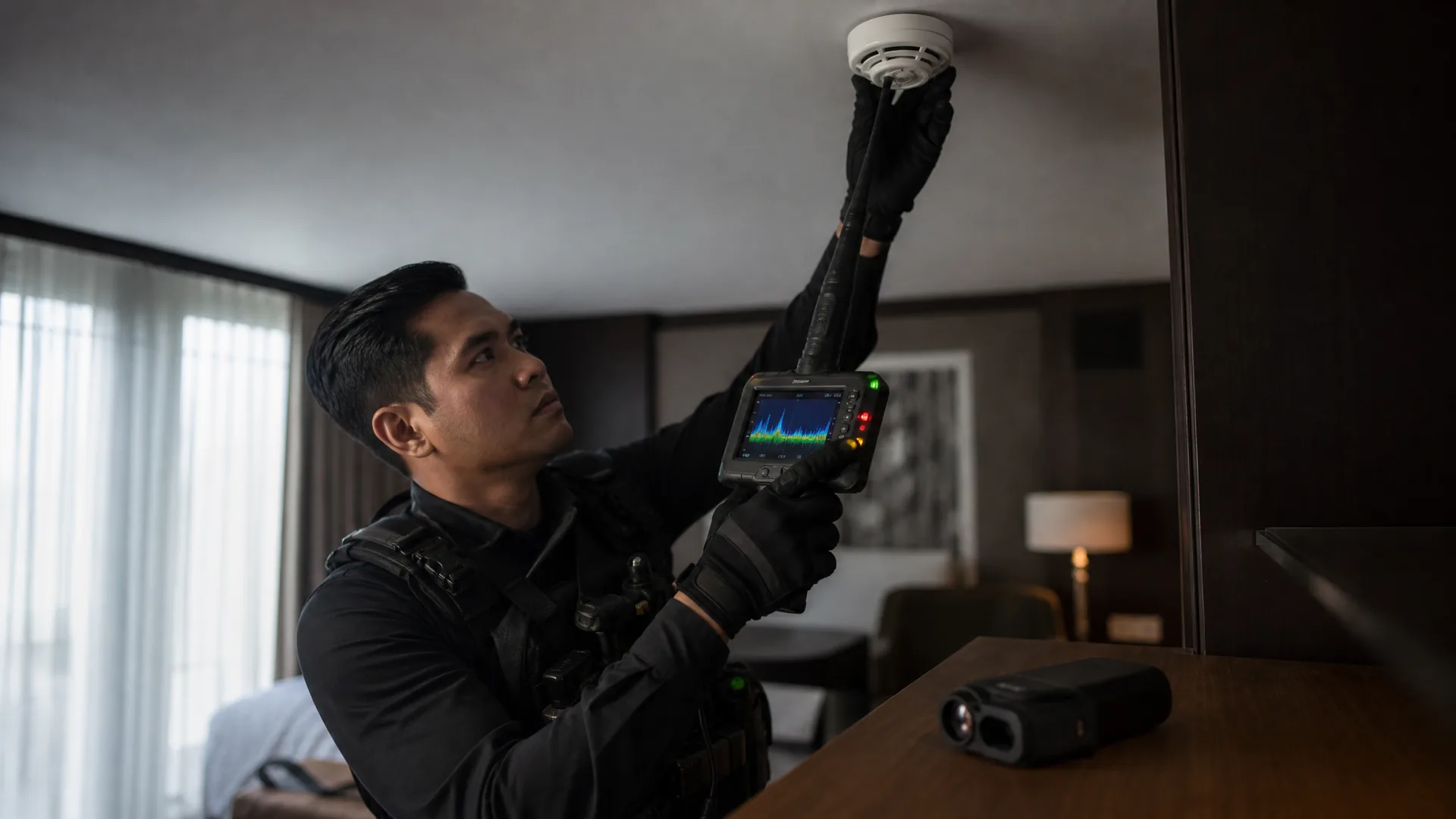
The spread of miniature recording devices has turned privacy from a passive expectation into an active security concern for Malaysian residents and businesses. Digital threats dominate the headlines, but physical visual surveillance remains a persistent risk in domestic disputes, corporate environments, and short-term accommodations. A professional hidden camera detection service in Malaysia addresses this specific vulnerability through technical precision rather than guesswork. Gunma Detective Agency has conducted technical surveillance countermeasures (TSCM) sweeps across Malaysia since 1999, serving private clients and corporate entities with Ministry of Home Affairs-certified operatives. This service is not a general security audit, and it is not a substitute for legal counsel. It is a specialized technical intervention designed to locate and document unauthorized visual recording devices.
Why Professional Hidden Camera Sweeps Are Necessary in Malaysia
Consumer-grade detectors sold online often fail against modern surveillance equipment. They lack the sensitivity to tell ambient noise apart from shielded transmissions. Professional intervention matters when the stakes involve personal safety, legal evidence, or proprietary business information that a false negative could compromise. High-definition spy cameras have become cheap faster than public awareness has caught up, which leaves covert recording technically simple even though it stays legally complex.
Risks in Short-Term Rentals and Private Residences
Short-term rental platforms have created, without meaning to, a market for illicit surveillance. Devices turn up concealed in smoke detectors, air purifiers, and bathroom fixtures. Tenants and guests face real exposure, since these cameras are often positioned to capture intimate moments without consent.
Residential sweeps also cover matrimonial homes, where one party may install recording devices to gather leverage during separation proceedings. These domestic installations are frequently hardwired into the existing electrical system, so there are no batteries to change and basic RF detectors find nothing.
Corporate Espionage and Boardroom Vulnerabilities
Businesses in competitive sectors face distinct risks when sensitive negotiations happen in spaces that have never been technically cleared. Competitors or disgruntled employees may plant optical devices in meeting rooms, executive offices, or washrooms to capture intellectual property or confidential discussions. Corporate espionage, unlike most residential cases, tends to involve equipment disguised as ordinary office infrastructure: power strips, wall clocks, that kind of thing. A thorough sweep identifies these threats before proprietary data leaves the building, protecting your organization's commercial interests and reputation.
Technical Methodology Behind Covert Camera Detection Services
Professional TSCM sweeps combine RF detection, optical lens finding, and thermal imaging, because no single tool reliably catches every modern covert camera, especially one that's hardwired or shielded. Relying on one detection method alone leaves gaps that experienced operators know how to exploit or avoid. Your assurance comes from this layered approach: electronic analysis paired with physical verification, so little is left to guesswork.
RF Signal Analysis and Lens Detection
Spectrum analyzers scan the radio frequency environment for wireless transmitters broadcasting video or audio across known and obscure bands. This electronic layer catches active devices that emit energy, telling legitimate signals apart from background interference through pattern recognition and signal-strength triangulation. Optical lens finders complement this work. They use focused light and viewfinders to locate camera lenses whether or not the device is powered on or transmitting.
Dormant cameras that record straight to an internal memory card give off no RF signature at all. That's exactly why optical detection is essential for full coverage.
Thermal Imaging and Physical Inspection Protocols
Thermal cameras reveal heat signatures from electronic components hidden inside walls, ceilings, or furniture. Even a low-power device gives off trace heat that differs from the surrounding material, letting technicians pinpoint anomalies invisible to the eye. Electronic scanning alone can't confirm a threat, so careful physical inspection of suspect fixtures remains the final verification step. Technicians dismantle accessible panels, examine wiring conduits, and inspect modified objects to visually confirm recording hardware before any evidence gets documented.
Legal Framework for Surveillance and Privacy in Malaysia
Understanding the legal boundaries of surveillance matters before commissioning a sweep or acting on a discovered device. Unauthorized visual recording in private premises without consent may violate Section 509 of the Penal Code and related privacy statutes in Malaysia, carrying potential criminal penalties depending on intent and location. Any response to discovered surveillance needs to stay lawful and admissible, which means these rules deserve careful attention.
Criminal vs. Civil Implications of Covert Filming
The line between criminal prosecution and civil liability often comes down to the perpetrator's intent and the reasonable expectation of privacy in the recorded space. Filming in bathrooms, bedrooms, or changing rooms typically triggers criminal provisions, given the clear violation of personal dignity involved. Surveillance in semi-public areas or shared workspaces, by contrast, can sit in grayer legal territory that needs case-specific assessment. Victims should consult legal professionals to work out whether their situation calls for a police report or a civil claim for damages.
Admissibility of Evidence in Legal Proceedings
Evidence obtained through illegal surveillance is generally inadmissible in Malaysian courts. That means victims can't use footage from unauthorized cameras to support divorce or custody claims. Evidence gathered during a licensed hidden camera detection service, on the other hand, can be properly documented and authenticated for legal use, and chain-of-custody protocols make sure discovered devices are handled in a way that preserves their evidentiary value. Understanding the legality of hiring a private investigator helps make sure your response to surveillance strengthens your legal position rather than undermining it.
Distinguishing Camera Sweeps from GPS and Spyware Detection
Visual surveillance calls for fundamentally different detection equipment and expertise than digital or vehicular monitoring threats. A hidden camera sweep targets optical devices and their transmission hardware; other services address entirely separate attack vectors. Confusing the two disciplines leads to incomplete security assessments that leave specific vulnerabilities unaddressed.
Physical camera detection focuses on locating lenses, image sensors, and video transmitters concealed within a building. That's a different job from a GPS tracker detection service, which targets location-monitoring devices attached to vehicles or assets. Spyware detection and forensic investigation is different again, addressing malicious software on phones and computers rather than physical hardware in rooms. Each discipline needs its own tools: spectrum analyzers and lens finders for cameras, nonlinear junction detectors for trackers, forensic software for malware. Comprehensive security often calls for several specialized sweeps rather than one generic assessment.
Common Scenarios Requiring Counter-Surveillance Sweeps
Certain situations carry an elevated risk profile that justifies proactive TSCM work beyond routine security measures. Recognizing these scenarios helps you decide when professional intervention is necessary rather than optional, since high-stakes environments demand verified clearance before sensitive activity resumes.
Matrimonial Disputes and Domestic Safety
In matrimonial disputes, hidden cameras are frequently found in bedrooms or common areas, installed by one spouse to gather leverage, this requires careful handling to preserve evidentiary integrity. These devices tend to surface during separation proceedings, once trust has broken down and one party seeks an advantage through covert documentation.
Victims in these situations face emotional distress on top of the privacy violation itself, which is why discreet, sensitive handling is paramount. Professional sweeps provide objective confirmation of surveillance, one way or the other, removing speculation from an already volatile situation.
Executive Protection and Sensitive Meetings
Corporate clients ask for sweeps before mergers, acquisitions, board meetings, or negotiations involving valuable intellectual property. Trade secrets discussed in a compromised room can cost far more than the sweep itself would have. Executives travelling internationally may also need temporary accommodation sweeps to guard against foreign intelligence collection or corporate espionage.
These scenarios call for operators who understand business confidentiality and can work outside normal hours to avoid disrupting operations. Broader counter-espionage TSCM sweeps may be warranted when visual surveillance looks like part of a coordinated intelligence-gathering operation.
Selecting a Licensed TSCM Provider in Kuala Lumpur
The TSCM industry includes both licensed professionals and unqualified operators whose work can compromise your legal standing. Verifying credentials before engagement protects you from substandard service and potential liability. Your choice of provider directly shapes how reliable the findings are, and how useful they turn out to be in any legal or security action that follows.
Verifying Ministry of Home Affairs Certification
Malaysian law requires private investigation agencies to hold a valid license issued by the Ministry of Home Affairs under the Private Agencies Act 1971. Unlicensed operators have no legal authority to conduct surveillance countermeasures, and their findings may end up rejected by a court as improperly obtained. Clients should ask for proof of current licensing and check operational history before retaining any firm. Gunma Detective Agency has held continuous certification and operated under this regulatory framework for over two decades.
Confidentiality and Post-Sweep Reporting Standards
Professional providers deliver a detailed written report documenting methodology, equipment used, areas inspected, and findings, with photographic evidence where applicable. These reports serve as official records suitable for legal proceedings, insurance claims, or internal security reviews. A confidentiality agreement should be signed before any sweep begins, to protect sensitive information disclosed during the engagement. Post-sweep debriefings explain findings in plain language and recommend remediation steps tailored to your situation. Clients looking for a broader response can look at full private investigation services, which extend beyond technical sweeps to physical surveillance and background investigations.
Next Steps After Detecting a Hidden Camera
Discovering an unauthorized recording device calls for immediate but measured action, to keep your options open for legal recourse and security remediation. A panic-driven response, destroying the device, confronting the suspected perpetrator on the spot, can destroy evidence and tip off the other side. Professional guidance at this stage decides whether the discovery becomes actionable intelligence or just a frustrating dead end.
Leave the device exactly as found. Don't touch it, disconnect it, or move it until forensic documentation is complete. Engage legal counsel before making any accusations or filing reports, so your response matches your strategic objectives. Licensed investigators can provide chain-of-custody documentation and expert testimony to support criminal or civil proceedings. Handled promptly, a privacy violation becomes verified evidence rather than an unsubstantiated claim.