Counterfeit Goods Investigation Malaysia
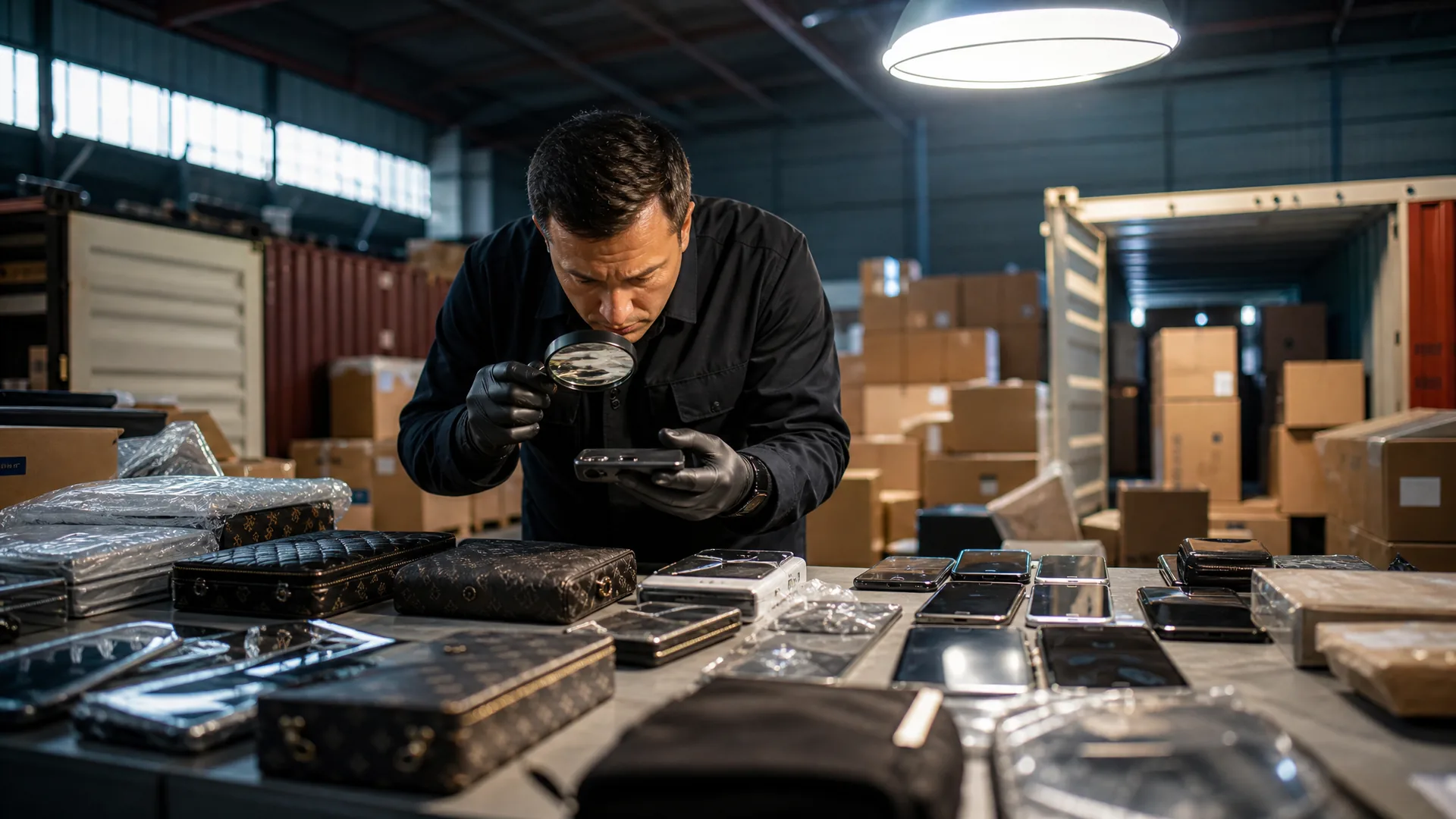
Counterfeit products cost brand owners far more than lost sales. They erode consumer trust, expose companies to product liability, and, in sectors like pharmaceuticals and electronics, put public safety at risk. A properly scoped counterfeit goods investigation Malaysia businesses can rely on does not simply confirm that fakes exist. It builds the evidence trail needed to act against the people producing and distributing them. That is where a private, investigation-led approach fills a gap that public enforcement alone cannot close.
Why Malaysia's Counterfeit Problem Needs Private-Sector Investigation
Malaysia sits at the crossroads of major shipping routes connecting China, the rest of Southeast Asia, and international markets. That geography is a commercial asset. It also makes the country an attractive trans-shipment point, and in some cases a manufacturing point, for counterfeit goods. Fake products move through wholesale markets, e-commerce platforms, and informal distribution networks before reaching consumers in Kuala Lumpur, Penang, Johor Bahru, and beyond.
Customs and police agencies do act on counterfeit cases, but their resources are stretched across many priorities, and enforcement typically follows a complaint or a seizure rather than a proactive strategy tailored to one brand's specific infringement problem. Raids based on incomplete intelligence often net a single retailer or a small warehouse, while the upstream manufacturer or importer continues operating under a different name. This is why an anti-counterfeiting investigation Malaysia brand owners commission privately tends to produce more durable results than a one-off customs tip.
The Gap Between Customs Enforcement and Brand Protection
Public authorities respond well once a case is built for them, but they are rarely positioned to conduct the sustained undercover work, market surveillance, and supply-chain mapping needed to identify repeat infringers before they resurface elsewhere. A private investigation firm can spend weeks tracing a single counterfeit product line back through several layers of distribution. That is an investment of time a busy enforcement unit is unlikely to make for every case referred to it. Private investigators build the case file that turns a suspicion into a prosecutable action, then hand it to customs, police, or the courts with the evidentiary foundation already in place.
What an Anti-Counterfeiting Investigation in Malaysia Involves
A structured brand protection investigation KL companies and legal counsel commission generally moves through several distinct phases, from initial market observation to a fully mapped supply network ready for enforcement action.
Undercover Purchase Operations
The investigation usually begins with test purchases. Investigators buy suspected counterfeit goods from retail and wholesale sources to establish a documented chain linking sellers to their upstream suppliers. Each purchase is recorded with receipts, packaging, product samples, and, where appropriate, covert photography or video of the transaction and the premises involved.
These purchases serve two purposes. First, they confirm that a genuine trademark or patent infringement is occurring, rather than a misunderstanding or a parallel-import dispute. Second, they generate a documented, repeatable transaction that investigators or authorities can later point to as evidence, rather than relying on secondhand reports.
Supply-Chain Infiltration and Source Tracing
Once a pattern of counterfeit sales is confirmed, investigators work to trace the goods upstream. This can involve posing as prospective bulk buyers to engage with wholesalers, following delivery routes, and identifying the warehouses or factories where goods are stored or produced. The goal is to map the network, not just the retail point of sale, so that enforcement action targets the source rather than a single storefront that can reopen under a new name within weeks.
This phase often overlaps with wider corporate concerns. A distributor suspected of selling counterfeit stock alongside genuine goods, for instance, may also warrant a broader corporate due diligence investigation before a brand owner decides whether to terminate the relationship.
Evidence Packaging for Brand Protection Raids
Confirming that counterfeits exist is only half the job. The evidence has to be organized in a form that customs officers, police investigators, or a court will accept.
Chain of Custody and Court-Admissible Documentation
Evidence gathered in a private investigation must follow a clear chain of custody, from the moment of purchase or observation through to storage and handover, if it is to hold up when presented to customs, police, or a court. Every purchased item is logged, sealed, and stored with a clear record of who handled it and when. Photographs and video are timestamped and geotagged where possible. Witness statements from investigators are prepared in a format consistent with what Malaysian courts expect for civil or criminal IP proceedings.
A complete evidence package for a trademark investigation Malaysia authorities can act on typically includes:
- Purchase receipts and transaction records tied to specific dates, locations, and individuals
- Product samples retained in sealed, labeled condition alongside genuine comparison items
- Photographic and video documentation of premises, signage, and stock
- A mapped account of the supply chain, from retailer to distributor to source
- Investigator statements detailing each stage of the operation
This package is what allows a raid to proceed with confidence rather than guesswork. It is often the difference between an enforcement action that results in a conviction or settlement and one that stalls for lack of admissible proof.
Who Needs a Brand Protection Investigation in KL and Beyond
Counterfeiting affects a wide range of industries, and the clients who commission this kind of work reflect that spread. FMCG companies deal with counterfeit packaging and refilled containers sold through informal retail channels. Luxury goods brands face sophisticated replicas sold both in physical markets and online. Pharmaceutical companies confront counterfeit medicines that pose direct health risks to consumers, which makes rapid investigation especially urgent. Electronics manufacturers see counterfeit components and finished devices that can damage both brand reputation and end-user safety.
Beyond the brand owners themselves, distributors and licensees also commission these investigations, often because their contractual obligations require them to monitor and report on counterfeit activity within their territory. Given Malaysia's position as a regional logistics and manufacturing hub in Southeast Asia, corporate clients frequently need an intellectual property investigation Southeast Asia can support across borders, not just within Malaysia. A counterfeit network identified in Kuala Lumpur may extend into Indonesia, Thailand, or Vietnam, and an investigation scoped only within one jurisdiction risks missing the larger picture. For companies already managing counterfeit exposure, an IP infringement investigation Malaysia teams conduct often runs alongside broader fraud investigation services, particularly where counterfeit sales are tied to invoice fraud or unauthorized parallel trading.
Working with Licensed Investigators on Fake Goods Cases
Not every operator offering "brand protection" services in Malaysia is properly licensed, and this matters more than it might first appear. Investigative work involving surveillance, undercover purchases, and evidence handling sits within a regulated space. Using an unlicensed operator can compromise both the legality of the operation and the admissibility of anything it produces.
Legal Boundaries and Coordination with Authorities
Private investigators conducting fake goods investigation Malaysia work must operate within clear legal boundaries. Investigators do not have police powers, so they cannot conduct raids, make arrests, or seize goods themselves. Their role is to gather lawful evidence, through observation, test purchases, and public-record research, and then to prepare that evidence for handover to the parties who can act on it: customs officers, police, or the courts.
Discretion is essential throughout this process. A counterfeit network that senses it is being investigated will often relocate stock, shut down a storefront, or destroy evidence within days. Coordination with customs and police is therefore usually kept tight and timed carefully, so that enforcement action follows quickly once the evidence package is complete, rather than allowing a gap in which the target can react. Brand owners considering this route should confirm licensed private investigator credentials before engaging any firm, since Malaysia's Ministry of Home Affairs oversees licensing for private investigation practice in the country.
Supply-chain tracing sometimes also draws on digital evidence, particularly where counterfeit goods are advertised or sold online. A digital forensics investigation can corroborate physical evidence by tracing e-commerce listings, seller accounts, and communications back to the same network identified through undercover purchases.
Starting a Counterfeit Goods Investigation with Gunma Detective Agency
Gunma Detective Agency has operated as a licensed private investigation firm since 1999, certified by Malaysia's Ministry of Home Affairs, with a multidisciplinary team spanning law, accounting, and security. That combination of legal, financial, and investigative expertise is what allows a counterfeit case to move from a single suspicious purchase to a fully documented network ready for enforcement action or litigation.
Brand owners, legal counsel, and distributors facing suspected counterfeit activity in Malaysia are welcome to arrange a confidential consultation to scope the investigation. Every engagement begins with absolute discretion, so that the counterfeit network under review is never alerted before the evidence package is complete. For companies also managing supplier risk more broadly, this work often pairs naturally with background check services to vet distributors and business partners before problems escalate into full enforcement matters.